Rethinking Democracy in Times of Crisis
How do democratic systems, and in particular consensus democracies such as Switzerland and Germany, function in times of crisis? Where do their strengths become visible, and where do their limits emerge? These questions framed the event “Rethinking Democracy: Responses to the Challenges of Our Time”, hosted by the Swiss Embassy in Berlin in collaboration with the University of Zurich (UZH).
At a time marked by geopolitical uncertainty, digital misinformation and growing political polarization, experts from Zurich and Berlin examined whether consensus democracies are uniquely resilient or increasingly strained.
The timely topic was explored from various complementary perspectives: institutional design, political participation, direct democracy and populism, and the role of civil society. As the evening unfolded, the discussion converged around three main insights: institutional stability, political participation under polarization, and the societal foundations of democratic resilience.

Stability under pressure
Consensus democracies are built on broad power-sharing: governments are formed through coalitions, minority voices are represented, and decisions are shaped by negotiation and compromise. Switzerland and Germany are often cited as examples.
Majoritarian systems, by contrast, concentrate authority in a parliamentary majority, enabling clearer responsibility and often faster decisions, but fostering a more adversarial political logic.
Silja Häusermann, Professor of Swiss Politics and Comparative Political Economy at the Institute for Political Science of the University Zurich, argued that while consensus systems may appear slower and blur accountability, their diffusion of power can enhance stability by reducing zero-sum dynamics and limiting radical policy shifts.
In divided societies, majoritarian logics may carry greater risks. As she put it: “Stronger majoritarian logic ultimately poses a greater risk. Consensus democracy is the better model for democratic resilience.”
At the same time, consensus governance depends on political actors who are willing and able to negotiate compromises and to explain their decisions credibly to society.
Polarization and political participation
Polarization was a central focus of the discussion. Rather than treating it solely as a symptom of democratic decline, the speakers examined how conflict may be processed within institutional frameworks.
Political disagreement and mobilization are inherent to democratic systems. The crucial question, as several speakers emphasized, is whether democratic systems can channel polarization constructively — for example by ensuring that political alliances and majorities remain open and shifting, by integrating challengers into formal responsibility, and by sustaining inclusive participation and civil society arenas in which conflict remains legitimate.
Political participation emerged as a key factor. Hanna Schwander, Chair of Political Sociology and Social Policy at the Humboldt-Universität zu Berlin, emphasized that democracies weaken when political participation systematically depends on social background and certain groups feel systematically excluded. This dynamic can create a self-reinforcing cycle: citizens who feel unrepresented disengage, further deepening inequalities in political voice.
Lower political participation does not necessarily signal political indifference. Younger generations may engage through civic initiatives or issue-based movements while disengaging from traditional electoral channels. Ensuring that all forms of participation remain meaningful and accessible is therefore key to democratic resilience.

The discussion of right-wing populist parties in Switzerland and Germany further illustrated how institutional contexts shape political trajectories. Drawing on the Swiss case, Michael Hermann, founder of the political research institute Sotomo, UZH alumnus and lecturer at the Department of Geography at the University of Zurich, noted that during periods of rapid electoral ascent, the influence of populist actors often extends beyond formal institutional power, reshaping political discourse and public attention. Over time, institutional integration can alter patterns of confrontation and redistribute responsibility.
Resilience, the speakers agreed, depends not on eliminating polarization, but on preventing citizens from feeling politically irrelevant.
Beyond institutions
A recurring argument was that consensus democracy cannot be understood solely as a set of institutional arrangements. It also depends on social conditions that lie beyond formal structures.
As Swen Hutter, Chair of Political Sociology at Freie Universität Berlin and UZH alumnus, emphasized, democratic politics unfolds not only in parliaments and governments but also in society – in civic associations, protest movements and public debate. Consensus systems rely on civic engagement, social trust and open channels of communication – conditions they cannot fully produce themselves. If these foundations weaken, institutional resilience may erode.
The discussion therefore moved from analysis to possible responses. Measures discussed included strengthening political education (particularly for younger generations), expanding local participation, addressing socio-economic inequalities that fuel perceptions of exclusion, and supporting civil society as a space for constructive conflict.
There was broad agreement that no single reform can secure democracy. Resilience emerges from the interaction between institutional design and societal engagement. Democratic stability depends on the ability to integrate conflict within shared rules while adapting to new challenges — a process that requires meaningful political participation, sustained dialogue and a willingness to learn.

Universities and UZH–Germany cooperation
Universities, as UZH President Michael Schaepman noted in his closing remarks, have a particular responsibility in this context — not only to analyse democratic developments, but also to create spaces for informed and pluralistic exchange. Events such as this one contribute to that responsibility by connecting academic research with policy-makers, diplomats and civil society actors.
The event in Berlin also underscored the close academic ties between Switzerland and Germany, which provided the framework for this exchange.
Germany is one of UZH’s most important collaboration partners across research, innovation and education, and stands out as the largest international presence among students and academic staff at UZH.
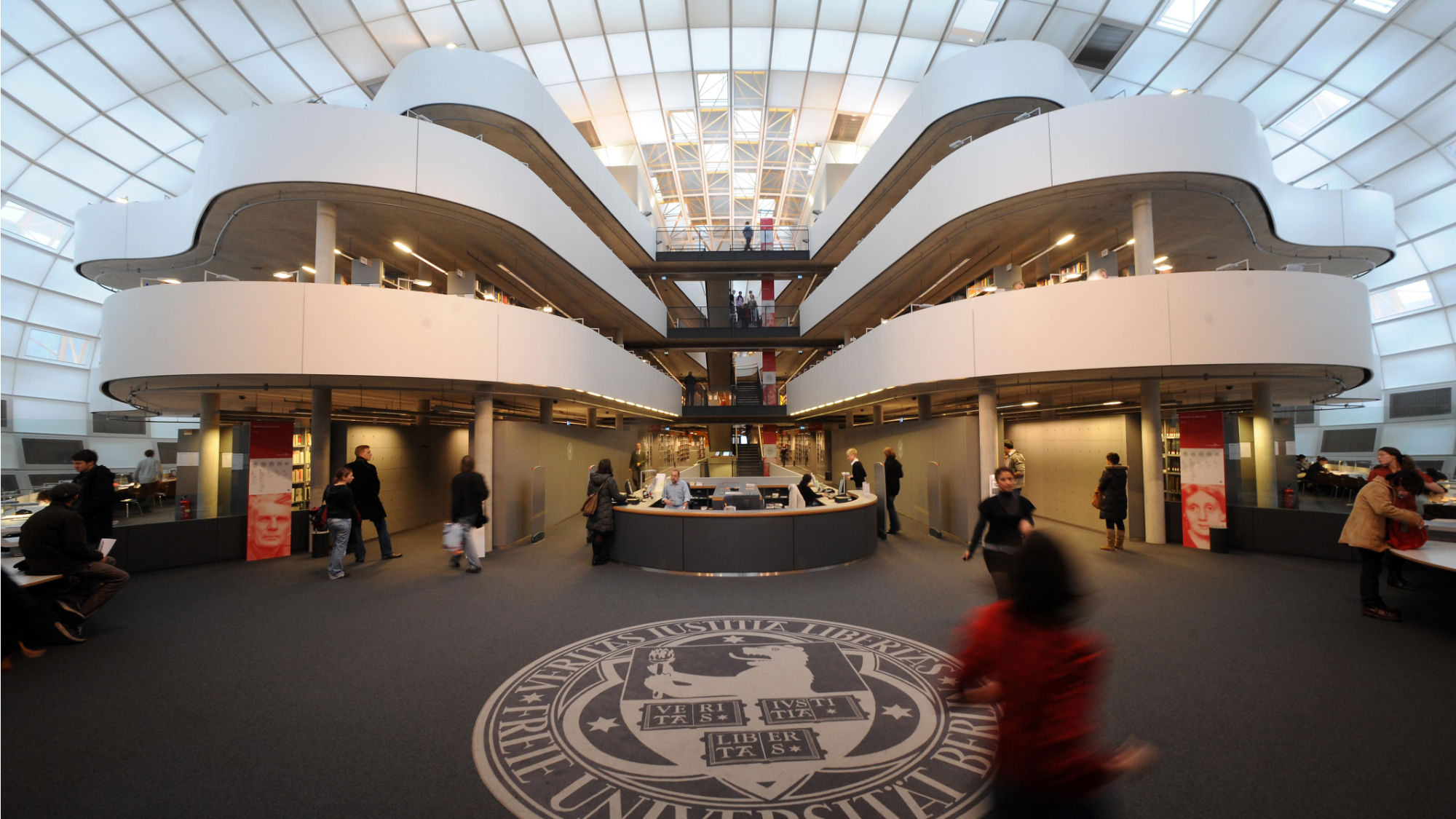
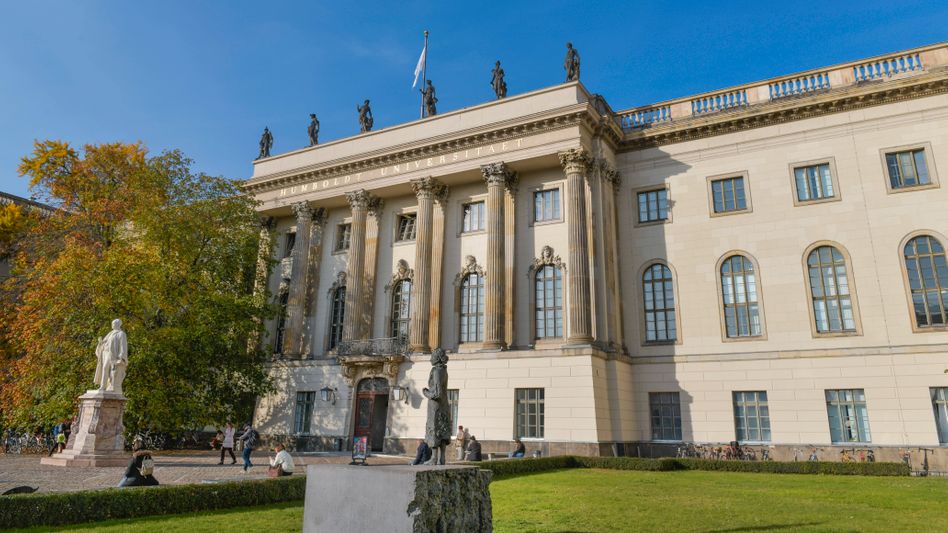
UZH maintains long-standing strategic partnerships with Freie Universität Berlin (since 2017) and Humboldt-Universität zu Berlin (since 2018), among its earliest strategic collaborations. Within the League of European Research Universities (LERU), UZH also cooperates closely with Ludwig-Maximilians-Universität München, the University of Freiburg and Heidelberg University.
These partnerships reflect the close academic and scientific relations between Germany and Switzerland. The Berlin event provided a further opportunity to deepen this exchange.







.jpg)