UZH at the 2026 Swiss-Korean Innovation Week: Exploring the Universe Across Scales
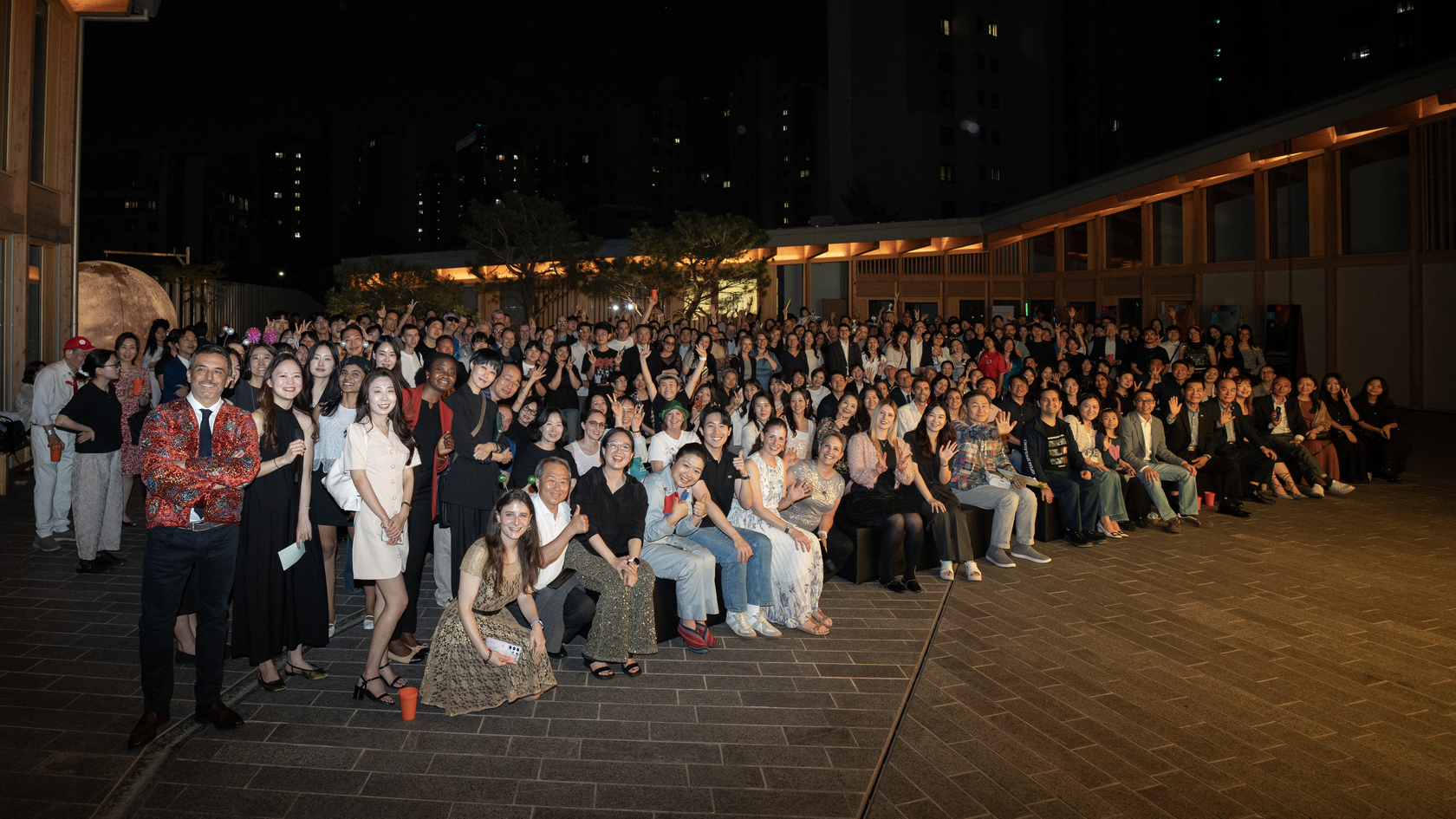
From June 9 to 13, 2026, the Swiss-Korean Innovation Week (SKIW) brought together researchers, innovators, diplomats, and industry representatives in Seoul to explore new opportunities for collaboration between Switzerland and South Korea.
Initiated by the Embassy of Switzerland in the Republic of Korea, the annual event has become a flagship forum for bilateral exchange in science, technology, innovation, and business. The theme of this year’s edition was “Unlocking Space – Ideas in Orbit” and focused on space as a frontier for scientific discovery, technological innovation, and sustainable solutions.
The program included a range of formats – from a Science Day and thematic workshops to a symposium and industry sessions – addressing topics such as astrophysics, cosmology, planetary science, engineering, and space sustainability. The University of Zurich (UZH) was represented by two leading researchers: Laura Baudis, Professor of Physics, and Ravit Helled, Professor of Theoretical Astrophysics and Director of UZH Space, who both contributed to key scientific sessions.
From “Dark Matter” to planetary systems
At the Swiss-Korean Science Day, researchers explored scientific discoveries across various scales – from the structure of the universe to planetary systems and space environments.
Laura Baudis’s presentation “Searching for dark matter in the Milky Way: where are we and where are we going?” focused on current efforts to detect dark matter using ultra-sensitive liquid xenon detectors. She highlighted results from the XENONnT experiment and outlined plans for the next-generation XLZD observatory, a large international collaboration involving both Switzerland and Korea as well as other partner countries.
Reflecting on the collaboration, Baudis noted: “I am very excited to present our research on direct dark matter detection at the Swiss-Korean Innovation Week, especially since colleagues in Korea are leading some of the searches deep underground. Together, we are aiming to build the next-generation liquid xenon observatory in astroparticle physics.”
Ravit Helled’s presentation “Understanding the most common planets in the universe” examined the formation, structure, and evolution of Uranus and Neptune. By linking these insights to exoplanets, she highlighted how research on our solar system informs our understanding of planetary systems across the galaxy. As she stated: “We find that Uranus and Neptune may in fact be ‘rock giants,’ calling into question the traditional view of these planets as ice-rich planets.”

From fundamental research to future missions
UZH researchers also contributed to the KASI–KARI workshop “Designing Space Future: Technology, Missions, and Earth Applications,” which brought together experts working at the intersection of science, space missions, and applied technologies.
Laura Baudis discussed the technological challenges of next-generation dark matter detectors, highlighting advances in detector design and collaboration that are enabling unprecedented sensitivity.
Ravit Helled presented on “Exploration of the Outer Planets in the Solar System,” outlining the scientific case for future missions to the ice giants and the importance of in-situ measurements. Her presentation also introduced the UZH Space, an interdisciplinary platform connecting research, communication, teaching and innovation across the university, which she leads as Director.
As Helled noted: “Exploring the outer planets is essential because they preserve key information about how planets form and evolve, providing critical constraints on the origin and diversity of planetary systems.”
Strengthening UZH–Korea collaboration
UZH’s participation in the Swiss-Korean Innovation Week reflects a broader and rapidly growing collaboration with Korean partners. Between 2020 and 2025, UZH researchers co-authored 1,390 scientific publications with Korean institutions, demonstrating the intensity and diversity of the bilateral research ties. Among these collaborations, Seoul National University (SNU) stands out as UZH’s leading partner, followed by Yonsei University. UZH also collaborates closely with Korea University through shared membership in Universitas 21 (U21), which aims to strengthen academic exchanges, mobility opportunities, and initiatives on addressing global challenges.
Driving collaboration through the Leading House Asia Pacific
UZH’s ties with Korea are also reinforced through its role as Leading House Asia Pacific, mandated by the Swiss State Secretariat for Education, Research and Innovation (SERI). In this capacity, UZH promotes and facilitates collaboration between Switzerland and countries across the Asia-Pacific region, including Korea.
The first call of the Leading House Asia Pacific funding scheme attracted strong interest from across the Swiss education, research, and innovation (ERI) sector. Among the more than 200 applications, over 40 projects submitted involved Korean partners, 7 of which ultimately received funding, highlighting Korea’s importance as a key partner country for Switzerland. With its strong performance in innovation and high levels of public investment in research and development, Korea continues to be one of Switzerland’s most dynamic and strategic collaborators in the region.

Space as a platform for collaboration
With the theme “Unlocking Space – Ideas in Orbit,” the 2026 Swiss-Korean Innovation Week demonstrated how space research connects fundamental science with technological innovation and international cooperation. The presentations by Laura Baudis and Ravit Helled illustrated how questions ranging from the nature of dark matter to the exploration of planetary systems increasingly rely on global partnerships, shared infrastructures, and interdisciplinary expertise.
As Helled stated: “I believe that Switzerland and Korea can collaborate in the development of space instrumentation, design future space missions, and develop small-satellite technologies. Strong opportunities exist in combining Swiss expertise in planetary missions and modeling with Korea’s growing capabilities in space engineering and exploration.”
By contributing to both the scientific and technological dimensions of the program, UZH has played an active role in advancing dialogue between Switzerland and Korea. The university’s contributions continue to strengthen its position as a globally connected research institution and a key partner in shaping the future of international scientific collaboration.